If you have ever seen someone drop “js” at the end of a text and wondered whether they were being sarcastic, honest, or just talking about code, you are not alone. JS is one of those tiny abbreviations that carries a surprising amount of weight depending on where you see it.
It shows up in casual chats, group texts, comment sections, and coding forums, and it means something different in each place.
This guide breaks down every common meaning of JS, from the programming language to the popular chat slang, so you never have to guess again.
JS most commonly means one of two things: “JavaScript,” the programming language that powers websites and apps, or “Just Saying,” a casual phrase people use in texts and social media to soften an opinion. Which one applies depends entirely on the context of the conversation.
What Does JS Mean in Text & Chat?
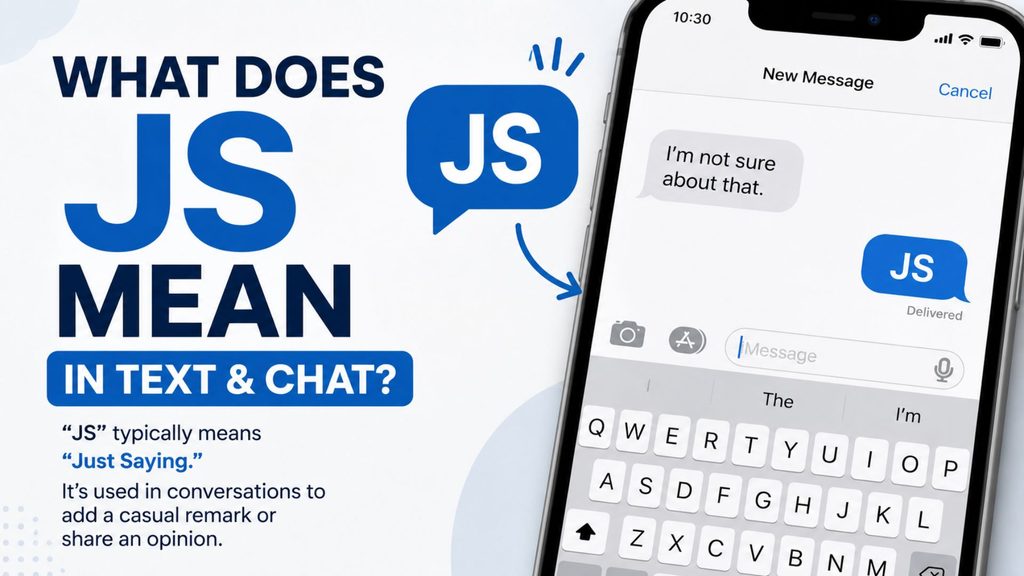
In everyday texting, JS almost always stands for “Just Saying.” People add it to the end of a message when they want to share an opinion, a piece of advice, or an observation without sounding too pushy or serious. It works like a verbal shrug, a way of saying “take it or leave it.”
The phrase softens whatever came before it. Instead of sounding like a demand or a criticism, the message feels more like a passing thought.
Quick examples:
- “You should probably charge your phone before we leave, js.”
- “I think she was a little rude earlier, js.”
- “Not trying to start anything, js, but you were late again.”
- “This restaurant has better reviews, js.”
In each case, JS acts like a cushion. It tells the reader that the sender is not trying to argue or lecture, just offering a thought.
Full Form, Stands For & Short Meaning of JS
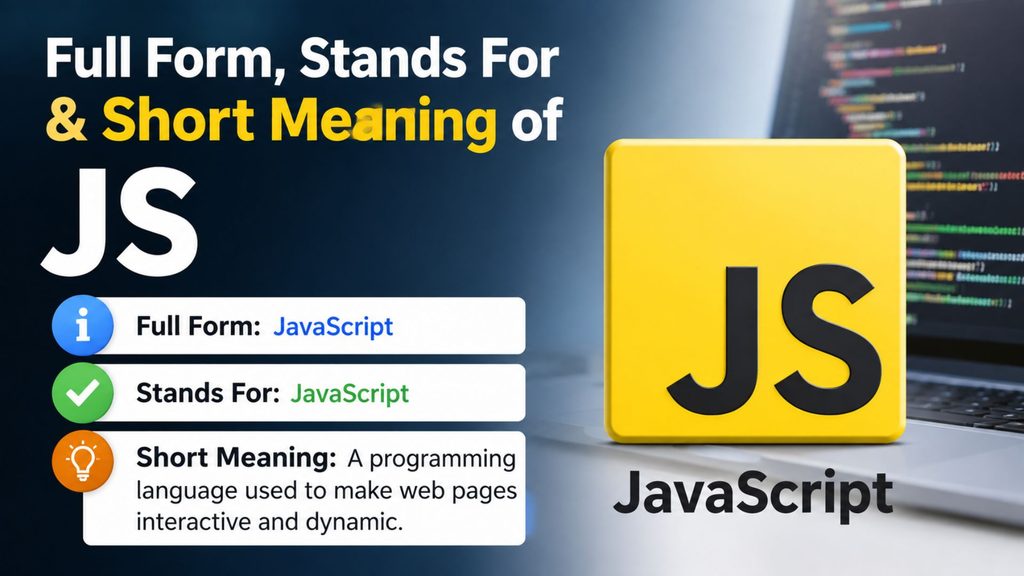
The full form of JS depends heavily on where you encounter it. In casual conversation, JS stands for “Just Saying.” In tech and coding spaces, JS is short for “JavaScript,” one of the most widely used programming languages in the world.
Other possible meanings:
- JavaScript – the coding language used to build interactive websites and web apps
- Jordan Shoes – shorthand some sneakerheads use for Air Jordans
- Just Saying – the most common chat and text meaning
- Just – occasionally used as a shortened version of the word “just” in casual writing
- Jersey – sometimes used in sports chats as shorthand for a jersey number or team jersey
- Personal initials – JS can simply be someone’s initials in an email signature or social media handle
Simple breakdown:
| Context | Likely Meaning |
| Text message or DM | Just Saying |
| Coding forum or developer chat | JavaScript |
| Sneaker or fashion group chat | Jordan Shoes |
| Email signature | Someone’s initials |
| Sports group chat | Jersey |
If you are unsure which meaning applies, look at the surrounding conversation. A message about React or web development almost certainly means JavaScript. A message that ends a sentence and feels like an opinion almost certainly means Just Saying.
Origin, History & First Known Use of JS
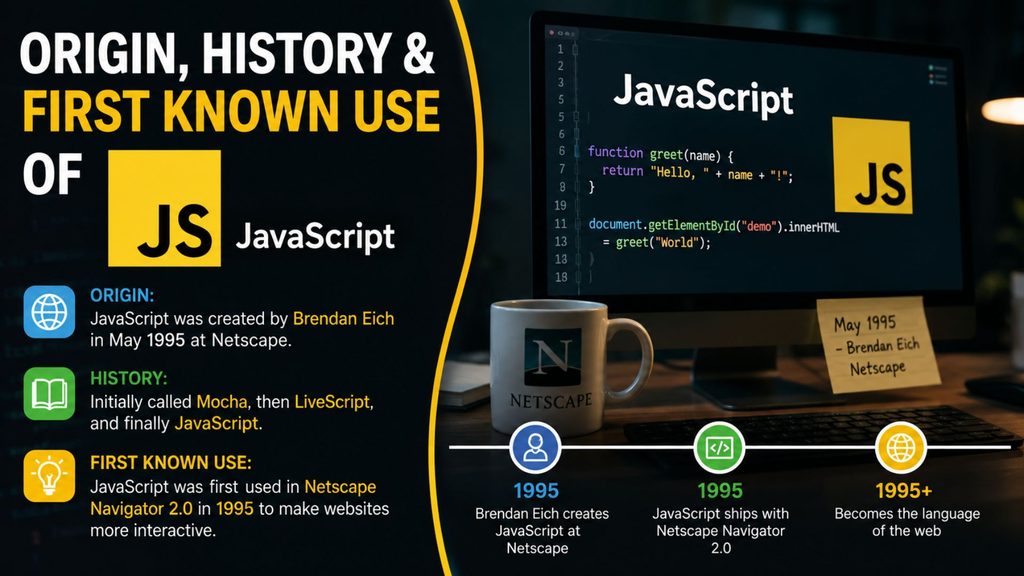
JavaScript itself was created in 1995 and quickly became a core part of how websites function, handling everything from dropdown menus to entire web applications. As the language grew, developers naturally started shortening its name to JS in code comments, file extensions (.js), documentation, and everyday conversation. That shorthand stuck and is now standard across the tech industry.
The slang meaning of JS as “Just Saying” grew out of a much older habit in spoken English. People have used the full phrase “just saying” for decades as a way to add a comment without taking full responsibility for how it might land.
When texting became widespread in the 2000s, shortening common phrases became the norm to save time and characters. JS joined a wave of abbreviations like LOL, BRB, and IMO that let people communicate faster without losing meaning.
Over time, JS moved from text messages into online forums, gaming chats, and eventually social media comment sections, where it remains common today.
JS Meaning in Chat
In chat apps and messaging platforms, JS is shorthand for “Just Saying.” It typically appears at the end of a sentence, right after someone has shared an opinion, a bit of advice, or a mildly blunt observation. The goal is to keep the tone light and prevent the comment from feeling like a lecture or a jab.
Why it became popular:
- It lets people share honest thoughts without sounding harsh
- It is quick to type and fits naturally into fast-paced conversations
- It gives the sender a bit of emotional distance from what they just said
- It works across almost any messaging platform, from texts to comment sections
- It has become a normal part of casual digital communication, especially among younger users
How People Use JS in Daily Conversations
JS shows up constantly in everyday chats, usually in situations where someone wants to be honest but not confrontational. It is common between friends, coworkers, family members, and even in flirty conversations.
Common situations:
- Giving someone a gentle heads up about something they might not want to hear
- Sharing an opinion about a decision without pushing too hard
- Making a lighthearted jab at a friend
- Pointing out something obvious without sounding condescending
- Softening a piece of advice so it does not feel like criticism
Examples:
- “You’ve texted him three times today, js.”
- “I liked your old haircut better, js.”
- “We could’ve left earlier and avoided traffic, js.”
- “That outfit is a little much for a Tuesday, js.”
Tone variations:
The exact same word can feel completely different depending on tone and relationship.
- Friendly tone: “You’d probably enjoy the sequel more than the original, js” feels like a casual recommendation.
- Passive-aggressive tone: “You never text back first, js” can feel like a pointed complaint dressed up as a casual comment.
- Sarcastic tone: “Sure, that plan will definitely work, js” can flip the entire meaning of the sentence into mockery.
Because JS is so short, tone almost always has to be read from context rather than the word itself.
JS Meaning Across WhatsApp, Instagram, TikTok & Snapchat
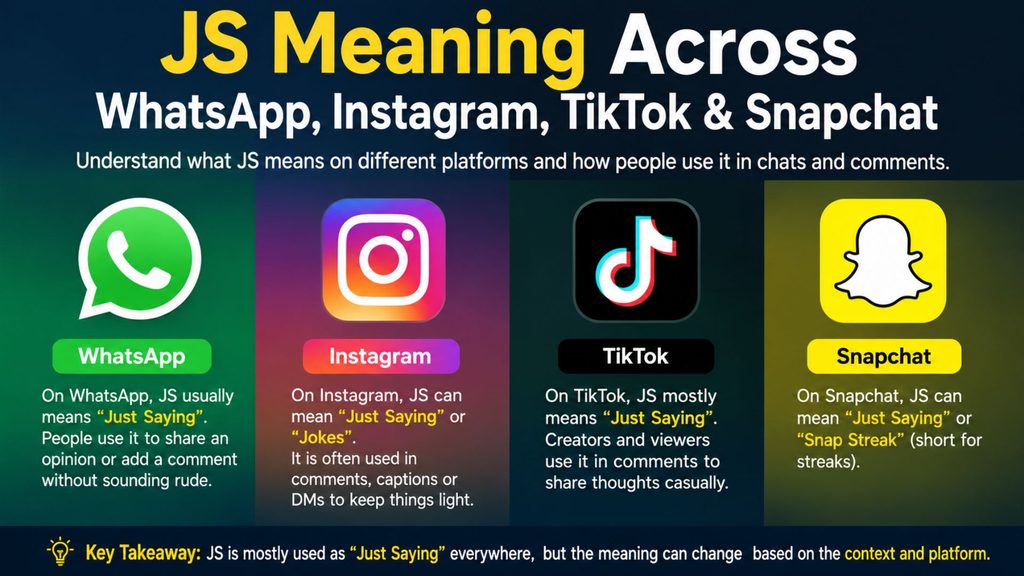
JS shows up on nearly every major platform, but the way it feels can shift slightly depending on where you see it.
On WhatsApp, JS tends to appear in personal or family group chats, often used casually between people who know each other well. It usually softens a suggestion or a light complaint, like reminding someone to bring an umbrella or pointing out they forgot to reply.
On Instagram, JS often pops up in comments and DMs. People use it to add a quick opinion under a post or story without sounding like they are trying to start a debate. It is common in comment threads where someone wants to share a differing view casually.
TikTok
On TikTok, JS frequently carries a bit more attitude. Comment sections move fast, and JS often gets used to drop a blunt or slightly cheeky opinion about a video, trend, or creator. It fits naturally into the platform’s quick, sometimes sarcastic comment culture.
Snapchat
On Snapchat, JS usually shows up in one-on-one chats rather than public posts. Because Snapchat conversations tend to be more personal and immediate, JS often softens something more private, like a comment about a mutual friend or a subtle hint about plans.
Different Meanings of JS in Other Fields
Outside of texting and web development, JS pops up in a handful of other contexts. These meanings are far less common but still worth knowing so you do not misread a message.
Common alternative meanings:
- JavaScript (.js file extension) – used in software development and file naming
- Job Seeker – occasionally used in career or recruitment contexts
- Junior Secondary – used in some educational systems to describe a school level
- Jump Shot – used in basketball commentary or sports chats
- Journal Sentinel – a newspaper abbreviation in some regional contexts
- Just Sold – sometimes used in real estate listings or marketing captions
Tip:
When you see JS in a context that has nothing to do with texting slang or code, look at the surrounding words. Industry-specific chats, like real estate captions or job boards, usually make the intended meaning obvious within a sentence or two.
Common Confusions, Mistakes & Wrong Interpretations

Because JS has more than one meaning, misunderstandings happen fairly often, especially between people from different age groups or industries.
Common mistakes:
- Assuming JS always refers to JavaScript when it is actually slang
- Reading “Just Saying” as an insult when it was meant to be harmless
- Missing sarcasm because the tone is not obvious in text
- Ignoring the rest of the conversation and reacting to JS alone
- Using JS in professional writing, where it can come across as too casual
Example confusion:
Imagine a coworker texts, “You’ve been late a lot this month, js.” Without context, this could read as either a gentle reminder from a friendly coworker or a passive-aggressive jab. The actual meaning depends on the relationship between the two people and the tone of the rest of the conversation.
How to avoid confusion:
- Read the full message, not just the abbreviation
- Consider who sent it and how they usually communicate
- Look at punctuation and capitalization for tone clues
- Ask directly if the meaning feels unclear, rather than assuming the worst
- Avoid using JS in formal emails or professional documents
Similar Terms, Alternatives & Related Slang
JS is part of a larger family of texting abbreviations that all serve a similar purpose: softening a statement or adding a casual tone.
Alternatives:
- IJS – “I’m just saying,” a slightly longer version of JS
- NGL – “Not gonna lie,” used before sharing an honest opinion
- TBH – “To be honest,” another way to soften a blunt comment
- IMO – “In my opinion,” used to frame a statement as personal viewpoint
- FWIW – “For what it’s worth,” used to add a low-pressure suggestion
Differences:
While these terms overlap in function, they are not identical. JS tends to feel a bit more casual and sometimes cheeky, while TBH and IMO feel slightly more sincere and direct. NGL often introduces a confession or a mildly awkward truth, whereas JS is more of a closing remark that softens what was already said.
Examples of JS in Real Chat Situations
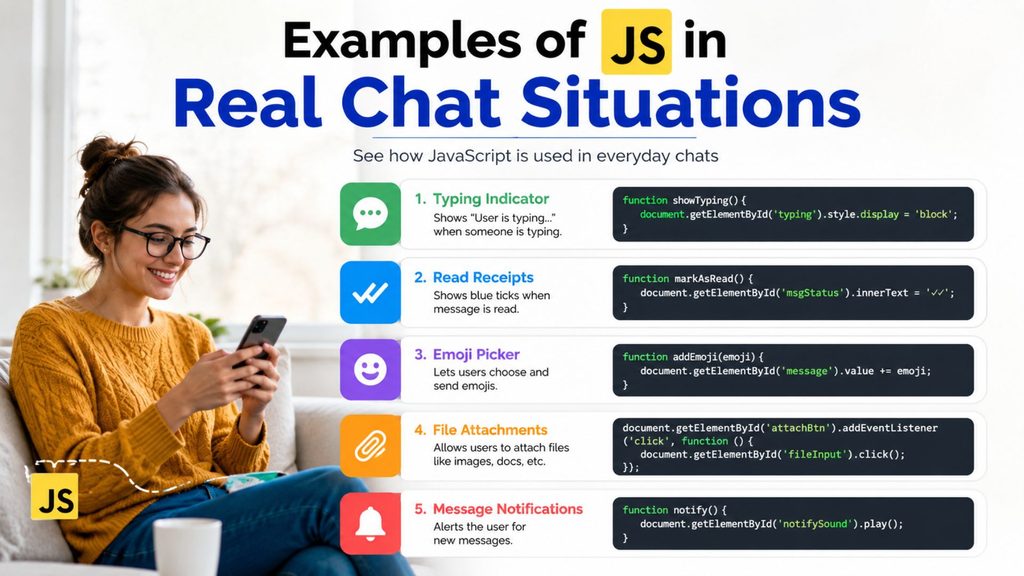
Here are a few realistic exchanges showing how JS naturally fits into everyday conversations.
Example 1: Friend group chat
“Are we still having dinner Friday?”
“Yeah, but Sarah’s running late again, js.”
Example 2: Dating context
“He never texts first.”
“You could just text him first too, js.”
Example 3: Work chat (informal team)
“The deadline moved up a day.”
“We probably should have started earlier, js.”
Example 4: Sibling text
“Mom’s mad you didn’t call back.”
“You could’ve reminded me earlier, js.”
In each case, JS keeps the comment feeling light rather than accusatory, even when the underlying point is a little pointed.
How to Reply When Someone Says JS
How you respond depends on the tone of the message and your relationship with the sender. Since JS usually signals a casual opinion rather than a serious confrontation, most replies can stay relaxed.
Possible responses:
- “Fair point, js back at you.”
- “Noted, lol.”
- “Okay okay, I hear you.”
- “Valid.”
- “Wow, okay 😂”
- If it feels more serious: “What do you mean by that?”
If the message feels genuinely passive-aggressive rather than playful, it is completely reasonable to ask for clarification instead of guessing.
Is JS Still Popular? Trends & Online Usage
Heading into 2026, JS remains a common piece of everyday texting slang, especially among Gen Z and younger millennials. While newer slang terms come and go quickly, JS has stuck around because it is short, flexible, and easy to drop into almost any conversation without much thought.
Why it’s still trending:
- It fits naturally into fast, casual messaging habits
- It works across texting, DMs, and comment sections
- It pairs easily with other slang like NGL or TBH
- It continues to appear in memes and short-form video comment sections
- It requires very little effort to type, which matters in fast-moving chats
While its popularity can shift depending on platform trends, JS has proven to be one of the more durable pieces of texting shorthand rather than a fleeting trend.
FAQs
What does JS mean in texts?
In texts, JS almost always means “Just Saying.” It is used to share an opinion or comment casually, without sounding too serious or confrontational.
What does “JS” mean in Gen Z slang?
Among Gen Z, JS is commonly used the same way, as “Just Saying.” It often appears at the end of a message to add a low-pressure opinion, sometimes with a playful or slightly sarcastic tone depending on the conversation.
What does JS mean?
JS has multiple meanings depending on context. In casual texting, it usually means “Just Saying.” In technology and web development, it stands for “JavaScript.” Less commonly, it can refer to things like Jordan Shoes, initials, or industry-specific terms.
What does “JS” stand for in chat?
In chat apps like WhatsApp, Instagram, TikTok, and Snapchat, JS almost always stands for “Just Saying,” used to soften an opinion or comment without sounding harsh.
Conclusion
JS is a small abbreviation with a surprisingly wide range of meanings. In most everyday texting and social media conversations, it stands for “Just Saying,” a simple way to share a thought without sounding too forceful.
In coding and web development spaces, it refers to JavaScript, one of the most important programming languages in use today. Depending on the setting, it can also point to a handful of less common meanings, from sneaker slang to industry shorthand.
The key to understanding JS is context. Once you know where you are seeing it and who is saying it, the meaning usually becomes clear. Whether you are decoding a friend’s text or reading a developer’s comment, JS is one of those abbreviations that says a lot in just two letters.

BlissWishy.com is a simple and friendly website created by James, dedicated to sharing heartfelt wishes, blessings, and meaningful messages for every special moment. From birthdays to daily inspiration, the site offers easy-to-read content that helps people express love, positivity, and joy in a thoughtful way.







1 thought on “JS Meaning: What Does JavaScript Really Mean?”