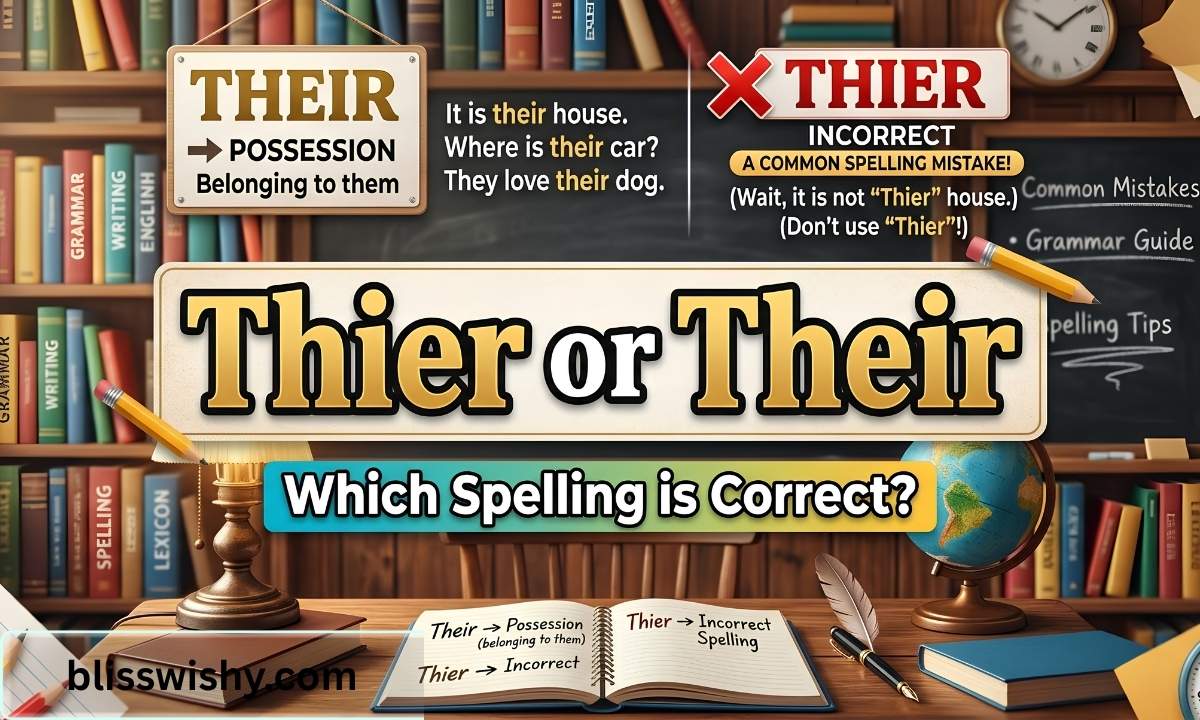
Typing a sentence and freezing halfway through because the possessive word suddenly looks wrong is one of the most common little stumbles in writing. You want to say something belongs to a group of people, and now you’re stuck wondering if it’s thier or their.
Here’s the short version: only one of these is a real word, and this guide clears up the confusion in the next few lines so you never have to pause over it again.
Quick Answer
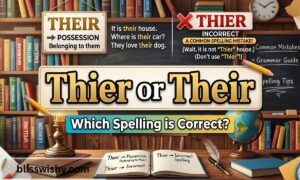
Their is the correct spelling. It’s a possessive pronoun showing that something belongs to more than one person, as in “their car” or “their decision.” Thier is not a real word in any dictionary, it’s simply a common misspelling caused by swapping two letters.
Simple Background
Their comes from Old Norse “þeirra,” brought into English during the Viking settlements of Britain over a thousand years ago. Old English originally used different possessive forms before this Norse influence, and their gradually replaced them as Norse speaking settlers and English speakers mixed in everyday life across the Danelaw region of medieval England. That Scandinavian origin is part of why their doesn’t follow some of the spelling patterns you’d expect from older, native English words, and it’s stayed essentially unchanged in spelling for centuries.
This Norse influence also explains why their looks and sounds so similar to other Scandinavian loanwords still used in English today, like “they” and “them,” both of which came from the same Old Norse pronoun family. English actually replaced its own native possessive pronouns with these borrowed Norse versions because they were simpler and easier to distinguish in fast, spoken conversation, which is a big part of why they survived and spread across the language so completely.
Clear Explanation of the Difference
The mix up between these two spellings usually comes down to one specific letter order mistake that’s easy to make and just as easy to fix once you see it clearly.
What is “Their”?
Their is a possessive pronoun used before a noun to show ownership by more than one person or thing. “Their house is the blue one on the corner” tells you the house belongs to a group, not to one single person.
What is “Thier”?
Thier is simply their with the I and E swapped out of order. It has no meaning of its own and doesn’t appear in any standard English dictionary, no matter how often it shows up in quick typing or text messages.
Thier or their or there
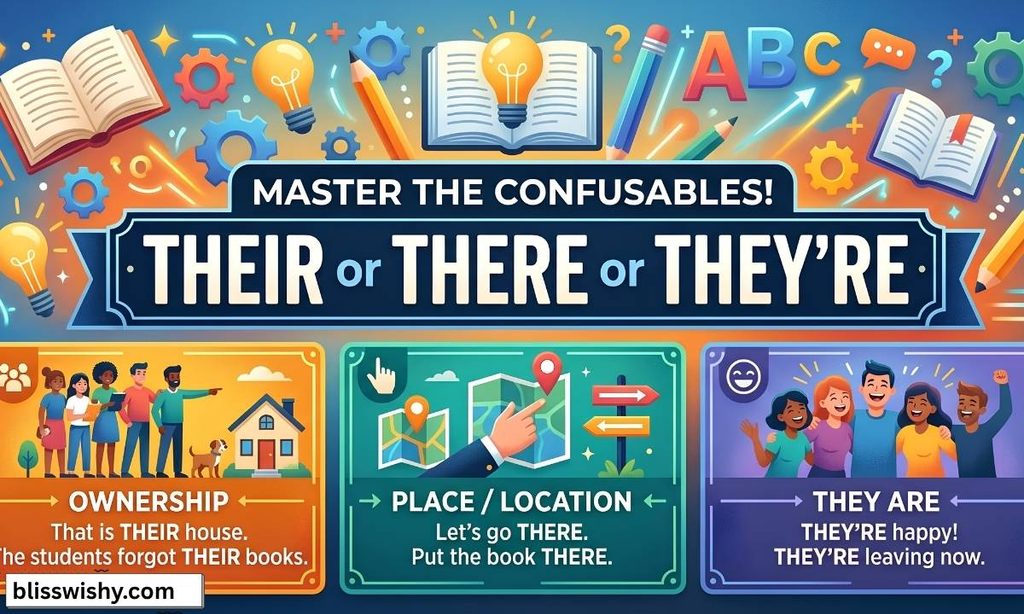
This is where things get genuinely tricky, since English has three words that sound almost identical but mean completely different things. Their shows possession, as in “their books.” There refers to a place or introduces a sentence, as in “put it over there” or “there are five apples left.” Thier isn’t a real word at all, it’s just a misspelling of their that happened to join this already confusing trio.
These three words are called homophones, words that sound the same but differ in spelling and meaning, and they consistently rank among the most misused words in the English language according to writing and editing software data. The good news is that there and their can be told apart fairly reliably: there almost always relates to location or existence, while their almost always sits directly in front of a noun showing ownership. Once you filter thier out of the equation entirely, since it simply isn’t a word, the remaining choice between there and their gets noticeably easier.
| Articles You Shouldn’t Miss |
| https://blisswishy.com/bite-past-tense/ |
| https://blisswishy.com/brasil-or-brazil/ |
Comparison Table
| Feature | Their | Thier |
| Grammatically correct | Yes | No |
| Meaning | Possessive pronoun | None, misspelling |
| Found in dictionaries | Yes | No |
| Common typing mistake | Rare | Frequent |
| Sounds like | “there” and “they’re” | Same as “their,” but spelled wrong |
| Accepted in formal writing | Yes | Never |
Which One to Use and When
Since only their is an actual word, this section stays short and practical.
Use their any time you’re showing that something belongs to more than one person or thing, right before the noun it’s describing. “Their flight got delayed” and “the students packed up their laptops” both use their correctly, showing ownership by a group.
Simple Tip to Remember
Their contains the word “heir” hidden inside it, minus the H, and an heir is someone who inherits or owns something. That small connection, their and heir both relating to ownership, is one of the easiest ways to lock in the correct letter order permanently.
Thier or their meaning
Their specifically means belonging to them, a group of two or more people, animals, or things previously mentioned or understood from context. “The dogs wagged their tails” tells you the tails belong to the dogs being discussed. Thier, since it isn’t a real word, has no meaning at all beyond being a misspelled attempt at their.
It’s worth noting that their can also refer to a single person when their gender is unknown, unspecified, or simply irrelevant to the sentence, a usage grammarians call the singular they. “Someone forgot their jacket in the lobby” doesn’t tell you whether that person is a man or a woman, and modern style guides, including the Associated Press and Chicago Manual of Style, now fully accept this usage in both formal and casual writing.
Their or they’re
While we’re clearing up spelling confusion, it’s worth addressing this related mix up too, since it trips up the exact same writers. Their shows possession, while they’re is a contraction of “they are.” “They’re bringing their own snacks to the party” uses both correctly in a single sentence, they’re standing in for “they are,” and their showing that the snacks belong to them.
Common Mistakes People Make
Most people who type “thier” aren’t careless writers. They’re just falling into one of the most common letter swapping patterns in English.
1. Reversing letters
This is the core mistake, swapping the I and E because your fingers move faster than your brain can double check the order. It’s one of the most frequent transposition errors in English, right alongside similar swaps like “recieve” for “receive” and “freind” for “friend.”
2. Confusing with other similar words
Since there, they’re, and their all sound identical when spoken aloud, writers sometimes default to whichever spelling feels most familiar in the moment, without stopping to check which meaning the sentence actually needs. This is especially common in fast, informal writing where autocorrect doesn’t always catch the mix up, since all three words are technically spelled correctly on their own.
3. Typing too fast
Quick texting and casual typing are where “thier” shows up most often, since spelling gets far less attention when you’re rushing to send a message. Slowing down for just a second before hitting send catches this mistake almost every time, and reading a message back once before sending is one of the simplest habits for avoiding it entirely.
Thier or their quiz
Test yourself with these quick fill in the blank sentences before moving on:
- The neighbors left ______ trash cans out overnight. (their)
- ______ flight was delayed by almost three hours. (Their)
- The company updated ______ return policy last month. (their)
- Is that ______ dog barking outside? (their)
If you filled in “their” for all four, you’ve already beaten the most common spelling mistake tied to this word.
Everyday Real-Life Examples
Seeing their used correctly across different everyday situations makes the correct spelling stick far better than a dictionary definition alone.
In Emails
“Please remind the vendors to send their updated invoices before Friday’s deadline.”
In Messages
“Can you tell them their table is ready whenever they get here?”
On Social Media
“Huge shoutout to this restaurant for their incredible customer service last night.”
In Daily Life
“The kids left their bikes in the driveway again.”
Thier or their grammar
Grammatically, their functions as a possessive determiner, meaning it always sits directly before a noun to show ownership, similar to how “his,” “her,” and “our” work. It never stands completely alone the way “theirs” does. “That’s their car” is correct, while using “their” without a following noun, like “the car is their,” would actually need “theirs” instead.
Their is also gender neutral and number neutral in modern usage, which makes it one of the most flexible pronouns in English. It can refer to a mixed group of people, an unspecified single person whose gender isn’t known or relevant, or a group of objects, as in “someone left their umbrella here” or “the birds built their nest in the oak tree.” This flexibility is part of why their shows up so often across nearly every kind of writing, from formal documents to casual conversation.
Thier or their examples
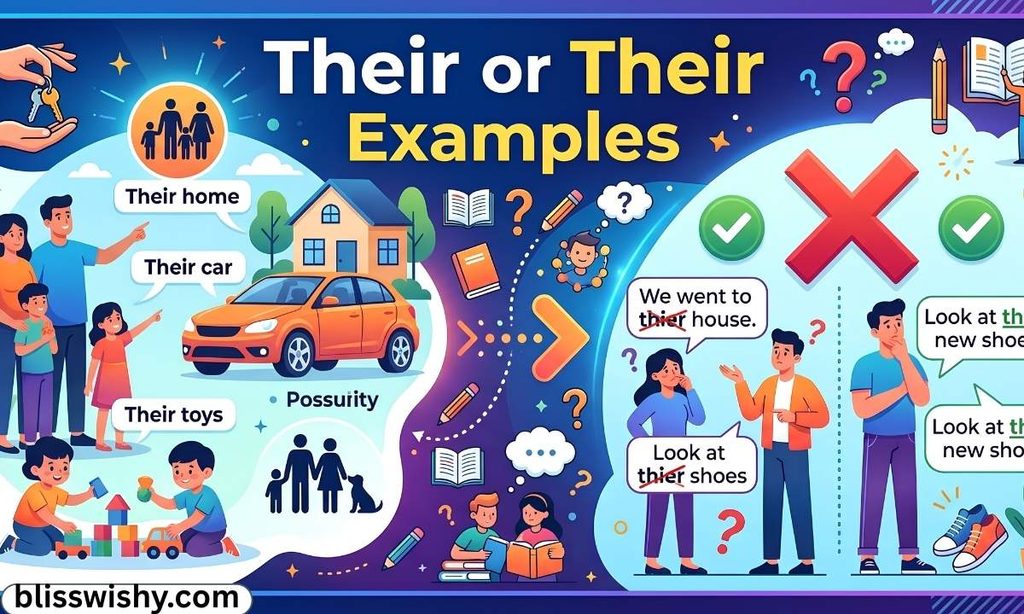
A few more side by side examples reinforce the pattern clearly. Correct: “Their opinions matter to the final decision.” Incorrect: “Thier opinions matter to the final decision.” Correct: “The team celebrated their win late into the night.” Incorrect: “The team celebrated thier win late into the night.” Notice the meaning stays identical, only the spelling changes between the correct and incorrect versions.
Short Learning Section for Students
If the spelling still feels shaky, breaking it into small steps makes it far easier to hold onto permanently.
Step 1: Learn the correct form
Start by writing “their” ten times on paper, saying each letter out loud as you write it: T H E I R. Repetition paired with speaking the letters helps the correct order stick in muscle memory.
Step 2: Practice
Write five original sentences using their correctly, each one describing something that belongs to a different group of people or things, like a family, a team, or a company.
Step 3: Use memory trick
Remember the hidden word “heir” inside their, since an heir inherits or owns something, which mirrors exactly what their is used to express in a sentence.
Step 4: Check spelling
Before submitting any important writing, do a quick search for “thier” in your document using the find function. If it appears anywhere, you’ve caught the mistake before anyone else sees it.
Thier or their I before e except after c
This word actually breaks the classic “i before e except after c” rule that so many people learn in school. Their has no C anywhere near the E and I, so by the rule alone, you’d expect I to come before E. Instead, their puts E before I, which is exactly why so many writers guess wrong and end up typing thier instead. This makes their one of the genuine exceptions to a rule that isn’t nearly as reliable as most people assume.
Frequently Asked Question
When use there or their?
Use there for location or to introduce a sentence, like “put the box over there” or “there is no more coffee.” Use their to show possession by a group, like “their coffee is on the counter.” A quick trick: if you can replace the word with “our” and the sentence still makes sense, you need their, not there.
What is the meaning of theirs?
Theirs is the possessive pronoun form that stands completely alone, without a following noun. “That car is theirs” means the car belongs to them, functioning the same way “his” or “hers” would in a similar sentence, and it never takes an apostrophe despite showing possession.
How can you use their?
Place their directly before a noun to show that noun belongs to a group of people or things. “Their garden,” “their schedule,” and “their decision” all follow this same straightforward pattern, and the noun that follows can be singular or plural depending on what’s being described.
Where can I use their?
Their fits naturally in any sentence describing shared or group ownership, from casual conversation to formal writing, emails, reports, and everyday speech. Its use isn’t limited to any particular setting or tone, and it works equally well in academic writing, business communication, and everyday texting.
Conclusion
Their is the only real spelling here, and once you connect it to the hidden word “heir” or remember that it breaks the usual “i before e” rule, the correct order becomes much easier to recall under pressure. Thier will likely keep showing up in quick texts and rushed typing, but now you know exactly why it’s wrong and how to catch it before it slips past you again.

BlissWishy.com is a simple and friendly website created by James, dedicated to sharing heartfelt wishes, blessings, and meaningful messages for every special moment. From birthdays to daily inspiration, the site offers easy-to-read content that helps people express love, positivity, and joy in a thoughtful way.








2 thoughts on “Thier or Their: Discover the Correct Spelling & Usage”